Intervals

Interval ear training can help you recognise notes and chords by ear. An interval is the distance in pitch between two notes. Different distances have different characteristic sounds, and so the intervals between notes have a big impact on the way those notes sound together.
Interval ear training can help you learn to recognize and reproduce intervals, and connect the characteristic sounds with their corresponding names. This may seem a little abstract, but it will assist you in a variety of real musical tasks.
For example:
- Appreciate and understand harmonies
- Hear how melodies are constructed
- Play by ear, using your improved sense of pitch distances
- Sight-sing by using intervals to understand the sheet music
- Distinguish mistakes or inaccuracies in pitch and tuning
Most musicians start by learning to recognise the intervals in one octave:
unison, semitone, tone, minor third, major third, perfect fourth, augmented fourth, perfect fifth, minor sixth, major sixth, minor seventh, major seventh, and perfect octave
There are some other names for these too (e.g. “half step”, “whole step”, “tri-tone”, etc.) but just 13 core intervals. Learning the sounds of these when the notes are ascending, descending and played together, and continuing on to study compound intervals (those larger than an octave) will solidify your ear for intervals even further.
The Ultimate Guide to Interval Ear Training
Here’s the best place to start: a comprehensive all-in-one guide which answers all the essential questions you might have about interval ear training: The Ultimate Guide to Interval Ear Training.
Why do Intervals Ear Training

At first, intervals can seem like a purely conceptual musical element, straight out of a music theory textbook. Use ear training to develop your interval recognition skills and sense of relative pitch though, and the theory is brought to life. You can actually hear in your head how the notes on the page sound.
Intervals are the building blocks of relative pitch which means that ear training intervals lets you understand the pitch of music, and comprehend melody and harmony by ear.
On top of this general benefit there are four specific musical advantages which intervals ear training provides:
- Measure distances in pitch with your ear
- Hear the notes in music more clearly
- Sight-sing with confidence and accuracy
- Bring music theory to life
→ Learn more about these benefits in “Interval Ear Training: What’s the point?”
How to do Intervals Ear Training
Many musicians never pause to consider how best to learn intervals and instead simply take a basic, theory-based approach.
In fact, there are three distinct methods you can choose from when learning intervals and if you really want to improve your interval recognition fast it’s important to choose the method that best suits you.
Depending on your musical background and interests, each method has its own advantages and disadvantages. Explore each of them so that you can choose the approach (or combination of approaches) that will develop your ear most effectively.
→ Learn about interval recognition methods in “How to Learn Intervals”
Help with Intervals Ear Training

Even with the right training method, there are times when every musician struggles with interval recognition.
There are some core questions you can ask yourself to ensure your ear training plan is on target and you’ll be able to stick with it reliably in the long term.
If you really want to achieve your interval ear training goals, it’s essential that you ask these questions and get clear on your own answers.
→ Learn more in “Interval Ear Training Help“
Tips and Tricks for Intervals Ear Training
With 13 different intervals in just one octave alone, there’s plenty of room for confusion with interval ear training!
Fortunately, there are lots of interval ear training tips and tricks you can use to boost your progress and help you with those tricky ones.
We’ve gathered up some of the best:
- General tips for interval recognition
- Tricks for identifying particular intervals
- Shortcuts to accelerate your progress with interval recognition
→ Learn more in “Interval Ear Training Tips and Tricks“
Series
 |
The Pitch & Harmony series starts by teaching intervals, and then uses them to build up to chords and more complex harmonies. A great starting point to get to grips with intervals, or to build on your existing knowledge. |
Intervals Music Theory
Watch a short video introducing the music theory behind intervals:
Topics Related to Intervals Ear Training
The topic of relative pitch covers a variety of pitch-based aural skills, including scales, intervals, chords and chord progressions.
 Intervals are made up of two notes – and so studying them leads you naturally to chords: 3 or more notes played together. Developing your aural skills for intervals will benefit your chord skills, and vice-versa.
Intervals can also be used as the building blocks for understanding musical scales. In particular you can use a keen sense of small intervals to really appreciate the pattern of a scale, and use your knowledge of larger intervals to recognise the overall character of the scale.
Interval Ear Training at Musical U
 Inside Musical U you’ll find a set of ear training modules for learning to recognise intervals by ear, along with a detailed roadmap to guide you and a large number of exercises and interactive quizzes to help develop your skills.
→ Learn more about Musical U membership
Interval Ear Training Exercises
Here are some listening exercises (MP3 training tracks) and an interactive quiz to help you start learning to recognise the different types of interval.
You can listen to the tracks or download them to practice with on your computer or mobile device. Use the “Training” tracks to listen carefully to each type of interval and tune your ear in to the different sounds. Each time an interval is played, it is then announced so you know what you’re hearing. Then listen to the corresponding “Test” tracks, which include a short pause after each interval. During the pause, try to identify the type of interval you just heard. You’ll hear the correct answer so you know if you got it right and have the chance to hear the interval again.
→ Interval Ear Training Exercises
Interval Ear Training Roadmap
 This roadmap is designed to teach you to play melodies (tunes) by ear using interval recognition. This same skill can also be useful for working out basslines in songs, and as a foundation to figure out more complicated music by ear.
Learn to recognise each type of interval, step-by-step, until you can easily and reliably recognise all the intervals used in the melodies you hear each day in music.
→ Roadmap: Play Melodies By Ear Using Intervals
Interval Ear Training Modules

Ear Expansion: Intervals
Learn all about intervals, and why they are important throughout music.
After completing this module: you will understand what intervals are and how recognising them will help you to be more musical.
Learning Intervals
Learn the best ways to develop your interval recognition skills with the Learning Intervals module.
After completing this module: you will understand the three approaches to learning intervals and the advantages of each.

Interval Recognition 1
Practise recognising different types of interval by ear (part one).
After completing this module: you will be able to reliably recognise half the intervals of the octave: unison, major and minor seconds and thirds, and perfect fourths and fifths.
Interval Recognition 2
Practise recognising different types of interval by ear (part two).
After completing this module: you will be able to reliably recognise all the intervals of the octave, adding tri-tones, major and minor sixths and sevenths and perfect octaves.

Introducing Intervals
Apply your interval recognition skills to hear intervals in real music with the Introducing Intervals training album.
After completing this module: you will be able to hear and identify intervals in real music.
Free articles about Intervals
How can I learn to recognize intervals?
Step One: Get up to speed on the basics Make sure you understand what intervals are and what you want to achieve. Step Two: Choose a method There are three popular approaches: Reference songs, solfege, and the “Nike method”. Reference Songs: Using tunes...
Intervals in 5 Minutes
Intervals are an essential skill for musicians, letting you play by ear, create your own music and improvise. Learn all you need to know in just 5 minutes.
The Many Moods of Musical Modes
Enter the exciting, nuanced world of the seven musical modes with our guide to understanding, building, and using these expressive scales.
Interval Reference Songs… That You’ve Actually Heard Of!
Interval reference songs are a helpful way to start learning intervals and relative pitch. Here are 29 fresh, modern songs to replace the old ones.
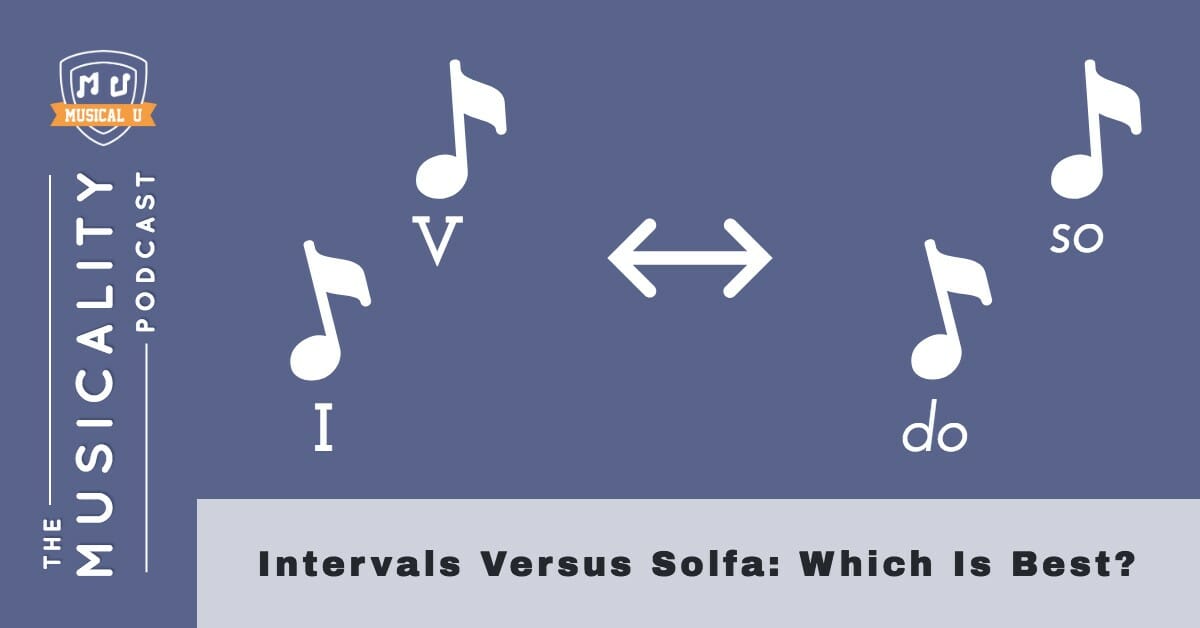
Intervals Versus Solfa: Which Is Best?
Listen to Musical U founder Christopher Sutton discuss the benefits of solfa (a.k.a. solfege) when interpreting music and learning to play by ear.
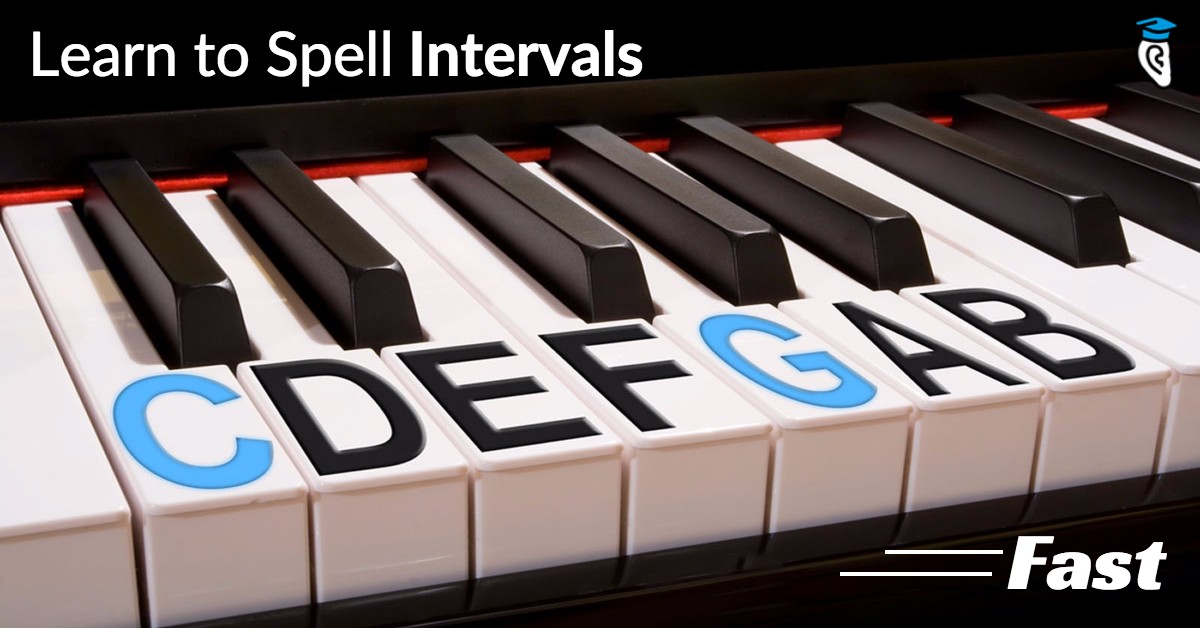
How to Learn to Spell Intervals Fast
Learning to spell intervals will help you play by ear and improvise easily. Get some top tips on how to learn this skill quickly with these 7 shortcuts.
About the Word “Tone”
What is the meaning of the word “tone” in music? Turns out, there’s many! Get acquainted with three of its possible uses.
How to Learn Intervals
Interval ear training builds your relative pitch, one of the core skills of musicianship. There are three main approaches to how to learn intervals.

5 Tips on Preparing for your First Ear Training Course
Is there an ear training course in your future? Don’t go there without being prepared! Just Another Flutist gives five tips on how to be ready for class.

About Whole Steps and Half Steps
As a musician you might have heard of “whole” and “half” steps, “major and minor seconds” or “tones and semitones”. Learn how they can empower you in music.
The Ultimate Guide to Interval Ear Training
Learning intervals is said to be essential for every musician. But why is interval ear training so important? Discover the answers in this ultimate guide.


Join Musical U
Musical U membership provides you with dozens of training modules, tools for goal-setting and planning, and a friendly, supportive community who will help you succeed.
Start reaching your true musical potential:

Listen/Watch The Podcast:

Ear Training Apps
Download free ear training apps to help you improve your ear for music: